
Shandong Wansai Technology Co., Ltd. is located in the chlor-alkali industrial cluster of Shandong Province. Backed by complete raw salt and energy supply infrastructure, the company is a modern chlor-alkali manufacturer specializing in the large-scale production of granular sodium hydroxide (caustic soda pearls / prills) using the ion-exchange membrane electrolysis process. The company integrates R&D, production, quality inspection, and export logistics. Its main products include industrial-grade 99% caustic soda pearls and food-grade caustic soda pearls, along with liquid caustic soda and caustic soda flakes.
The factory operates multiple continuous closed spray granulation production lines, equipped with large granulation towers, four-effect vacuum falling-film evaporation systems, and DCS automatic control systems. The process starts with electrolysis of refined brine to produce 32% high-purity liquid caustic soda, followed by low-temperature closed concentration, molten refining, high-tower spray air-cooling forming, and automated screening and packaging. The entire process is isolated from air, strictly controlling sodium carbonate, sodium chloride, and iron ion impurities to prevent moisture absorption and deterioration. Compared with the traditional flake-making process, caustic soda pearl granulation equipment requires higher capital investment, but the finished product has round and uniform particles, good flowability, low dust, and is suitable for automated production line feeding.
Core Production Capacity & Quality Control
Annual designed capacity of caustic soda pearls: 5 million tons, capable of stable large-volume continuous supply.
Executive standards: GB/T 209-2018 "Sodium Hydroxide for Industrial Use", GB 1886.20-2016 "Food Additive Sodium Hydroxide".
Quality inspection: The quality inspection center is equipped with titration analyzers and atomic absorption spectrometers; a Certificate of Analysis (COA) is issued for each batch.
Certifications: ISO9001 Quality Management System and ISO14001 Environmental Management System.
Stable product specifications: NaOH ≥ 99.0%, low sodium chloride and low iron, meeting the needs of multiple industries including daily chemical soap bases, textiles, papermaking, water treatment, oil refining, and food processing.
I. Basic Information
Chemical Name: Sodium Hydroxide (granular solid)
Common Names: Caustic Soda Pearls, Caustic Soda Prills; English: Sodium Hydroxide Pearls / Caustic Soda Prills
Molecular Formula: NaOH; Molecular Weight: 39.997
CAS No.: 1310-73-2; EINECS: 215-185-5
UN Number: UN 1823 (Class 8 Corrosive Substance, Packing Group II)
HS Code: 2815110000 (Sodium Hydroxide, Solid)
Also known as: Caustic Soda, Lye
Distinction: Caustic soda pearls = spherical beads; caustic soda flakes = flake form. Both have the same chemical composition, differing only in physical form.
II. Physical & Chemical Properties
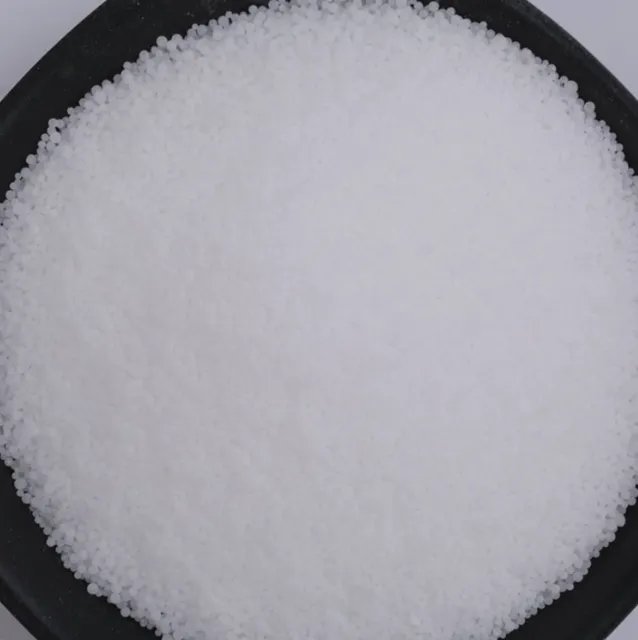
Appearance: White uniform spherical beads, mainstream particle size 0.5–2 mm, odorless.
Available in fine pearls and coarse pearls.
Density: 2.13 g/cm³; Melting point: 318.4 °C; Boiling point: 1390 °C
Solubility: Highly soluble in water with significant heat release; soluble in ethanol and glycerol; insoluble in ether and acetone.
Hygroscopicity: Rapidly deliquesces when exposed to air, absorbs CO₂ to form sodium carbonate (deterioration): 2NaOH + CO₂ → Na₂CO₃ + H₂O
Alkalinity & Corrosivity: Aqueous solution pH ≈ 14; corrodes skin, mucous membranes, eyes, and fabrics; corrodes aluminum and zinc, releasing hydrogen gas; slowly corrodes glass and ceramics with prolonged contact.
Stability: Stable under normal temperature, dry, and sealed conditions; avoid storage with acids, oxidizing agents, and reactive metals.
III. Main Grades & Technical Specifications
1) Industrial-Grade Caustic Soda Pearls — GB/T 209-2018
(Ion-Exchange Membrane Process, Premium Grade)
Item Specification
NaOH ≥ 99.0 %
Na₂CO₃ ≤ 0.80 %
NaCl ≤ 0.05 %
Fe₂O₃ ≤ 0.008 %
Appearance White spherical beads / pearls
2) Food-Grade Caustic Soda Pearls — GB 1886.20-2016
(Food Additive Sodium Hydroxide, E524)
Strictly controlled heavy metals (lead, arsenic). Industrial-grade product must never be mixed or substituted. Used exclusively as a food processing aid.
IV. Caustic Soda Pearls vs. Flakes
Item Caustic Soda Pearls Caustic Soda Flakes
Form Spherical beads, excellent flowability Thin flakes, easily broken, dusty
Dust Low dust generation Higher dust generation
Feeding Suitable for automated equipment, pneumatic conveying, precise dosing Suitable for simple manual feeding
Hygroscopicity Relatively slower moisture absorption Faster moisture absorption, more prone to caking
Cost More complex production process, price 5%–10% higher Simple process, cost-effective
Dissolution Rate Dissolves steadily Dissolves faster
Selection Recommendation: Automated production lines, fine chemicals, daily chemical soap bases, and export customers should prioritize caustic soda pearls.
V. Production Process
The ion-exchange membrane caustic soda process is the mainstream technology:
Saturated brine electrolysis → 32% liquid caustic soda → multi-effect evaporation and concentration → molten caustic soda → spray cooling and forming in granulation tower → finished caustic soda pearls.
The high capital investment in granulation equipment is the core reason why caustic soda pearls are priced higher than flakes.
VI. Core Application Fields
1. Daily Chemical & Detergent (Complementary Industry with SLES)
Soap base manufacturing: saponification of oils and fats to produce soap and handmade soap.
Detergent raw materials, animal and vegetable oil refining.
2. Textile & Dyeing
Cotton fabric desizing, scouring, mercerizing, dye solvent.
3. Papermaking Industry
Wood pulp and straw pulp cooking and pulping.
4. Water Treatment
pH adjustment of wastewater, neutralization of acidic wastewater, ion exchange resin regeneration.
5. Chemical Industry
Production of borax, oxalic acid, formic acid, phenol.
Oilfield drilling mud, petroleum product refining.
6. Metallurgy & Surface Treatment
Alumina production, metal cleaning, electroplating degreasing.
7. Food-Grade Specific Applications
Fruit and vegetable peeling, sugar decolorization, soybean product processing.
CIP alkaline cleaning of food equipment (must be thoroughly rinsed after use).
VII. Packaging, Storage & Transportation
Standard Packaging
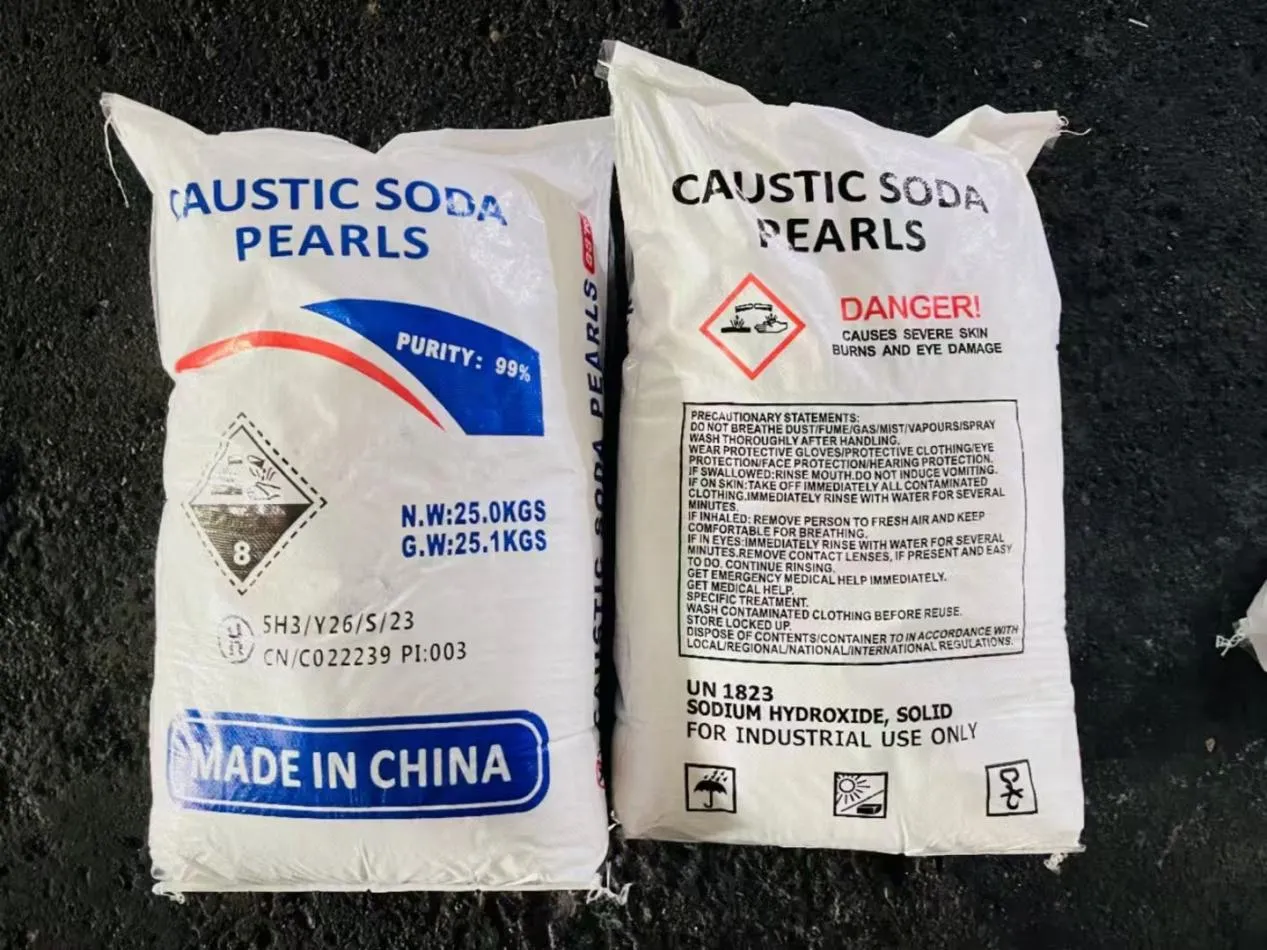
25 kg double-layer packaging (inner PE film bag, heat-sealed + outer PP woven bag). 1000 kg jumbo bags (FIBC) are also available.
Storage Requirements
Store in a cool, dry warehouse; keep sealed and moisture-proof.
Stack pallets off the ground and away from walls.
Strictly no outdoor storage.
Keep away from acids, aluminum/zinc metals, and food products.
Sea Transportation
UN1823, Class 8 corrosive product; a dangerous goods packaging certificate is required.
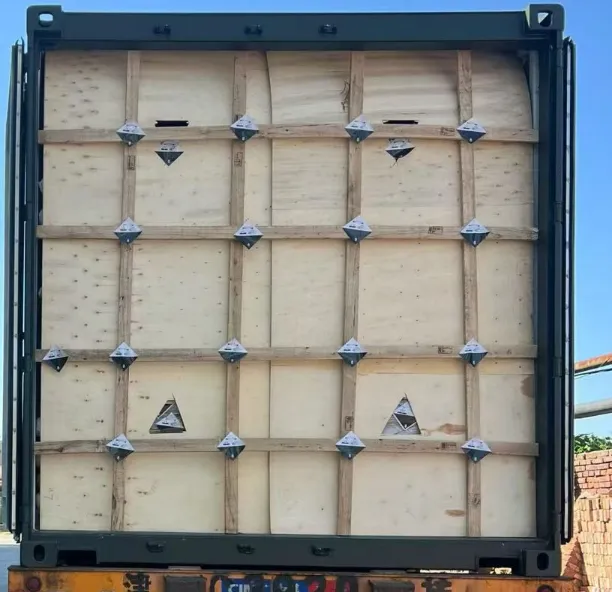
Containers must be dry to prevent moisture absorption and caking.
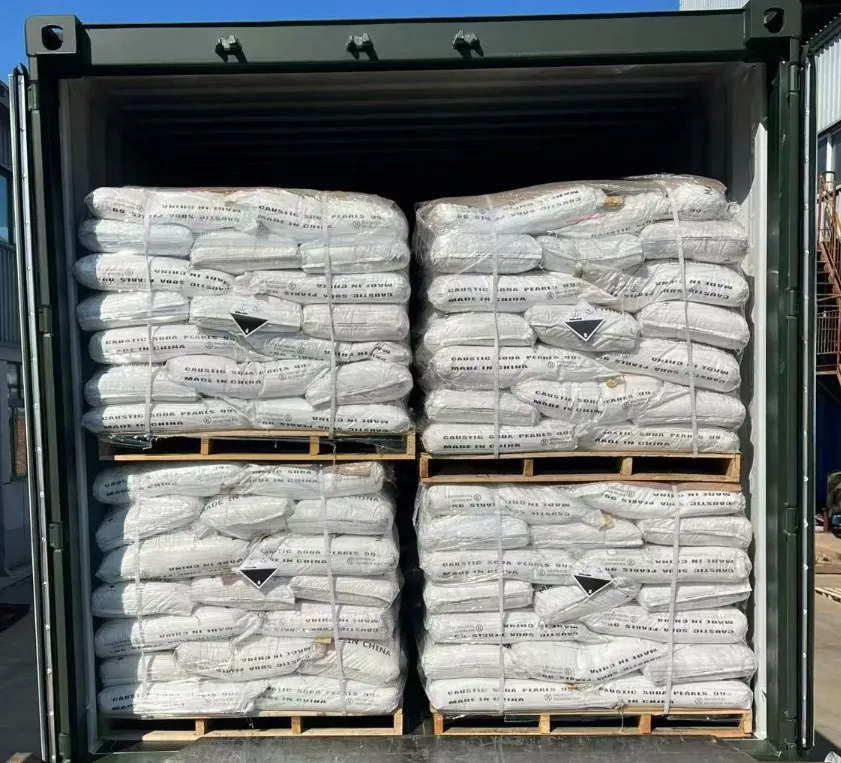
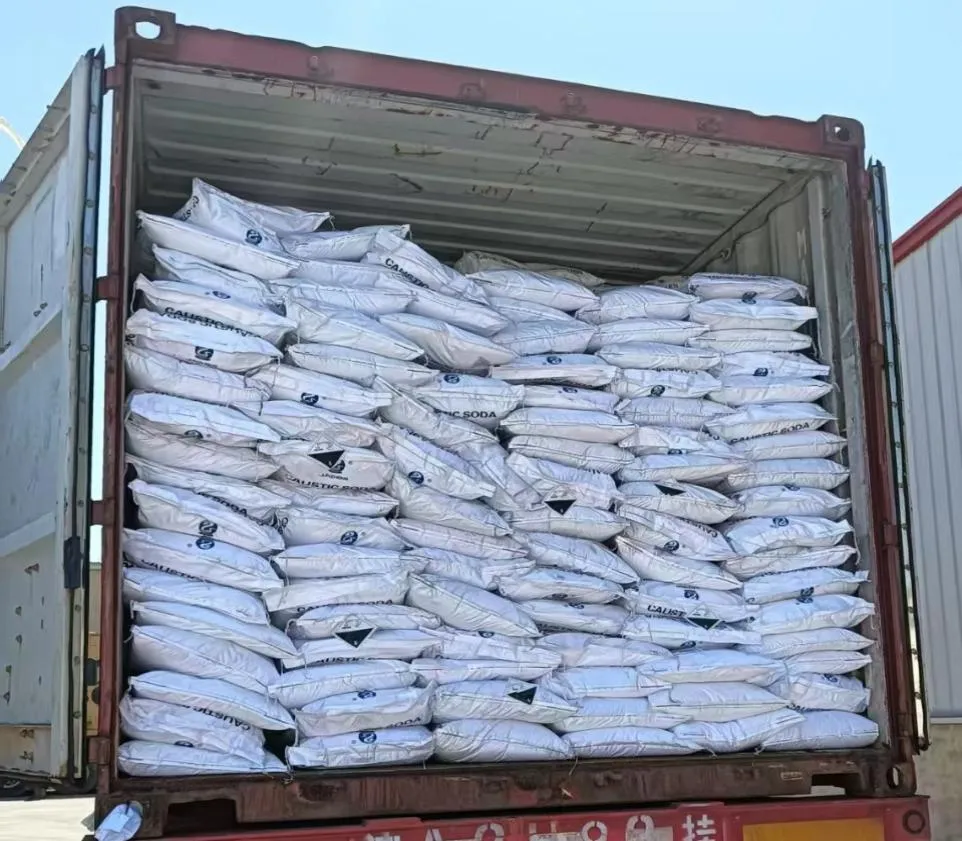
Figure 4. Container loading — bulk stacked bags
Shelf Life
12 months under sealed and dry conditions.
VIII. Safety Operation Points (Key MSDS Items)
Personal Protection: Wear alkali-resistant gloves, safety goggles, and acid/alkali protective clothing. Direct skin contact is prohibited.
Dissolution Operation: Slowly add caustic soda to water. NEVER pour water into caustic soda pearls! Violent heat release can cause splashing and severe burns.
Spill Handling: Collect spilled solids carefully and absorb with sand. Do not flush directly with water, as this will spread the corrosive material.
First Aid: Skin contact — rinse with plenty of running water for at least 15 minutes. Eye contact — continuously rinse with water and seek medical attention immediately.
IX. Common Foreign Trade Q&A
Q1. Is caustic soda pearls classified as a dangerous product?
A: Solid sodium hydroxide is classified as UN1823, Class 8 corrosive product, and is regulated as a hazardous chemical for both sea and land transportation.
Q2. Can food-grade and industrial-grade products be mixed or substituted?
A: Absolutely not. The impurity standards differ significantly. Food processing may only use food additive-grade NaOH (E524).
Q3. Can caked product still be used?
A: Slight moisture caking does not affect chemical effectiveness, but dissolution becomes more difficult. Severe moisture absorption that converts the product to sodium carbonate results in quality degradation and reduced NaOH content.

Copyright © 2026 by Waycen Technology (Shandong)Co., Ltd. All Rights Reserved