
Name: Ferrous Sulfate Heptahydrate
Molecular Formula: FeSO₄·7H₂O
CAS: 7782-63-0 | EINECS: 231-753-5
Molecular Weight: 278.02 | HS Code: 2833291000
Physical and Chemical Properties
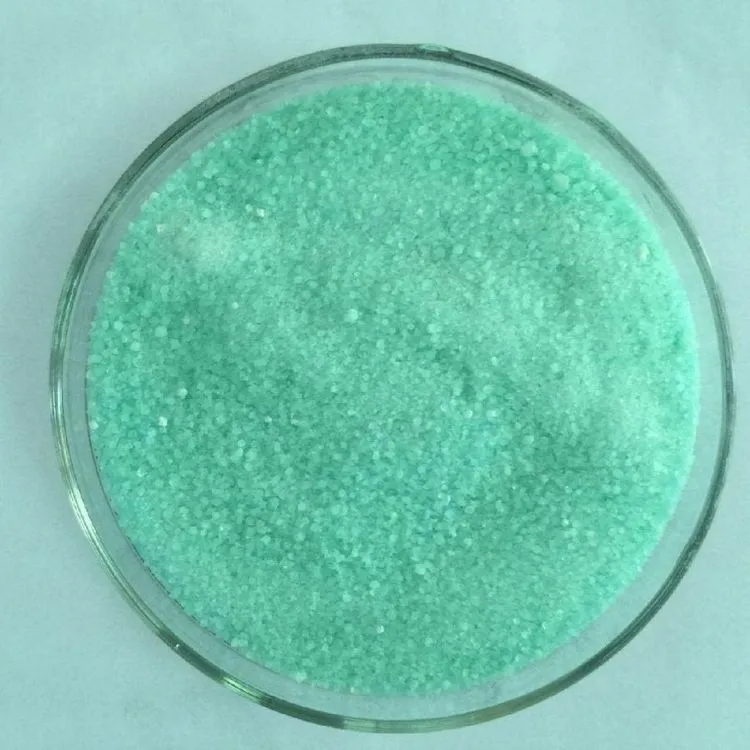
1. Appearance: Light blue-green / pale green monoclinic crystals, commonly known as green vitriol; odorless with a salty-astringent taste.
2. Density: 1.898 g/cm³ (15°C); Melting point 64°C (loses 3 molecules of water of crystallization at this temperature).
3. Solubility: Soluble in water and glycerol; insoluble in ethanol; solubility at 20°C is approximately 25.6 g/100 mL; aqueous solution is acidic, pH ≈ 3.0–4.0.
4. Chemical Properties:
• Reducing property (key characteristic): Easily oxidized by oxygen in humid air; the surface gradually turns yellow-brown forming basic ferric sulfate (Fe³⁺), causing the product to become ineffective. In dry air, it undergoes efflorescence, releasing white powder.
• Upon heating: At 300°C, loses all water of crystallization to form anhydrous ferrous sulfate; further decomposition at high temperature produces iron oxide, sulfur dioxide, and sulfur trioxide (toxic fumes).
• Incompatible substances: Strong oxidizers and strong alkalis; exposure to light accelerates oxidative deterioration.
Product Grades
• Agricultural Grade: For fertilizer and soil improvement; Fe²⁺ ≥ 19%; purity 90–98%; 25 kg woven bag / bulk bag.
• Water Treatment / Industrial Grade: For sewage flocculation, decolorization, and reduction — the most commonly used grade; purity 90–98%.
• Feed Grade: Iron nutritional fortifier for animal feed; strict heavy metal limits.
• Reagent Grade (AR/CP): For laboratory analytical use.
• Food Grade: Iron fortifier for food products (limited application).
Main Applications
1. Water Treatment (Largest Application Field)
• Coagulant: Flocculation, phosphorus removal, decolorization, and COD removal in wastewater treatment plants; raw material for producing polyferric sulfate (PFS).
• Reducing agent: Reduction of hexavalent chromium (chromium-bearing wastewater), heavy metal treatment; arsenic removal in water treatment plants.
Advantage: Low cost. Disadvantage: Prone to oxidation — must be prepared fresh before use.
2. Agriculture / Horticulture
• Iron-supplementing fertilizer: Prevention and treatment of iron-deficiency chlorosis (gardenia, rose, fruit trees); supplies divalent iron to promote chlorophyll synthesis.
• pH adjustment: Lowers pH in alkaline soils; can kill moss and lichen; auxiliary control of fruit tree diseases (apple/pear scab, wheat smut).
Warning: Do NOT mix with alkaline fertilizers (quicklime, wood ash) — precipitation will render it ineffective.
3. Industrial Applications
• Pigments: Raw material for iron oxide red, Prussian blue, iron oxide black, and other iron oxide pigments.
• Textiles: Mordant; leather tanning and preservative.
• Battery / New Materials: Precursor raw material for lithium iron phosphate (LiFePO₄) production.
• Traditional: Raw material for iron gall ink (iron-tannin ink).
4. Pharmaceutical & Feed
• Pharmaceutical: Oral iron supplement for treating iron-deficiency anemia.
• Feed additive: Iron supplementation for animals to prevent iron-deficiency anemia.
Preparation Methods
Main industrial routes:
1. Titanium dioxide by-product method (the primary domestic source; ferrous sulfate is a byproduct of ilmenite processing for TiO₂ production).
2. Reaction of iron filings with dilute sulfuric acid: Fe + H₂SO₄(dilute) = FeSO₄ + H₂↑; cooling crystallization yields green vitriol crystals.
Storage and Packaging
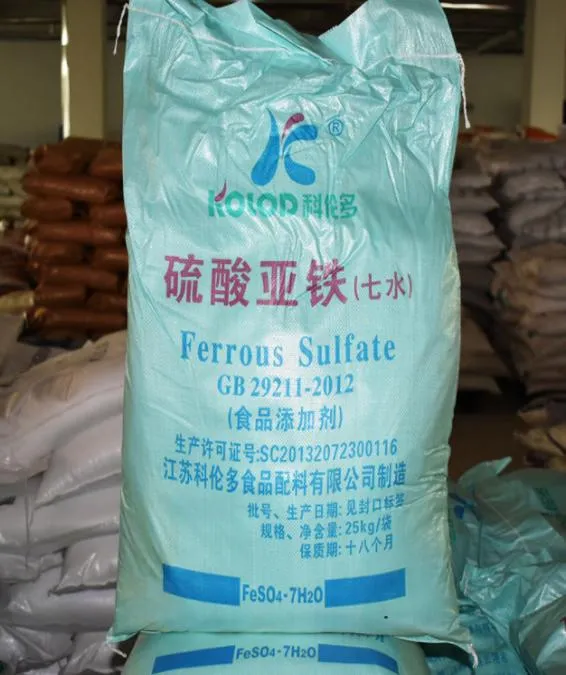
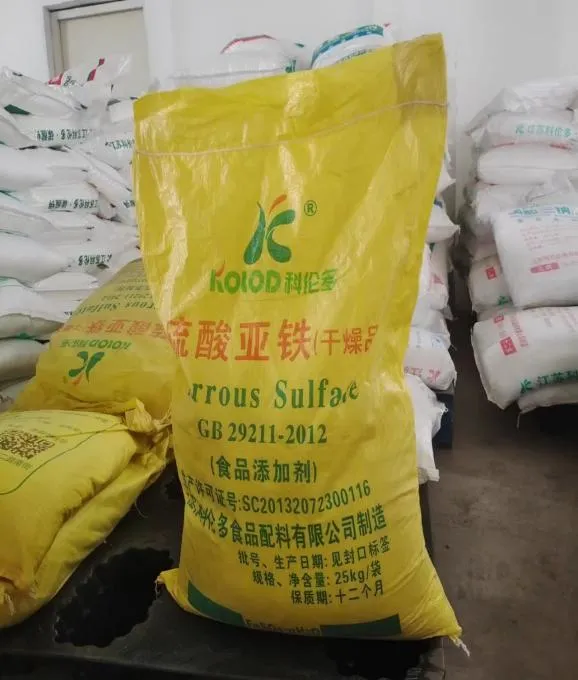
• Packaging: 25 kg PP woven bag with PE film liner; bulk bag available; 25 kg bag is standard for export.
• Storage conditions: Cool, dry, and well-ventilated warehouse; MUST be sealed; protected from light and moisture; DO NOT store with oxidizers or alkalis.
• Shelf life: Due to susceptibility to oxidation, prolonged storage is not recommended — use within 6 months. Minor caking can be broken up and still used; severe yellow-brown discoloration indicates oxidative degradation and product failure.
VI. Safety Information (SDS Key Points)
GHS Signal Word: WARNING
• Harmful if swallowed; causes skin irritation; causes serious eye irritation; dust inhalation irritates the respiratory tract.
• Acute toxicity: Mouse oral LD50 = 1520 mg/kg.
• Operational protection: Wear dust mask, safety goggles, and acid/alkali-resistant gloves; avoid dust generation; wash hands after work.
• Spill handling: Collect solid material; do NOT flush directly into the sewer; for large spills, contain and collect.
• Firefighting: This product is non-flammable; in case of fire, use dry powder or sand — do NOT use direct water spray.

Copyright © 2026 by Waycen Technology (Shandong)Co., Ltd. All Rights Reserved